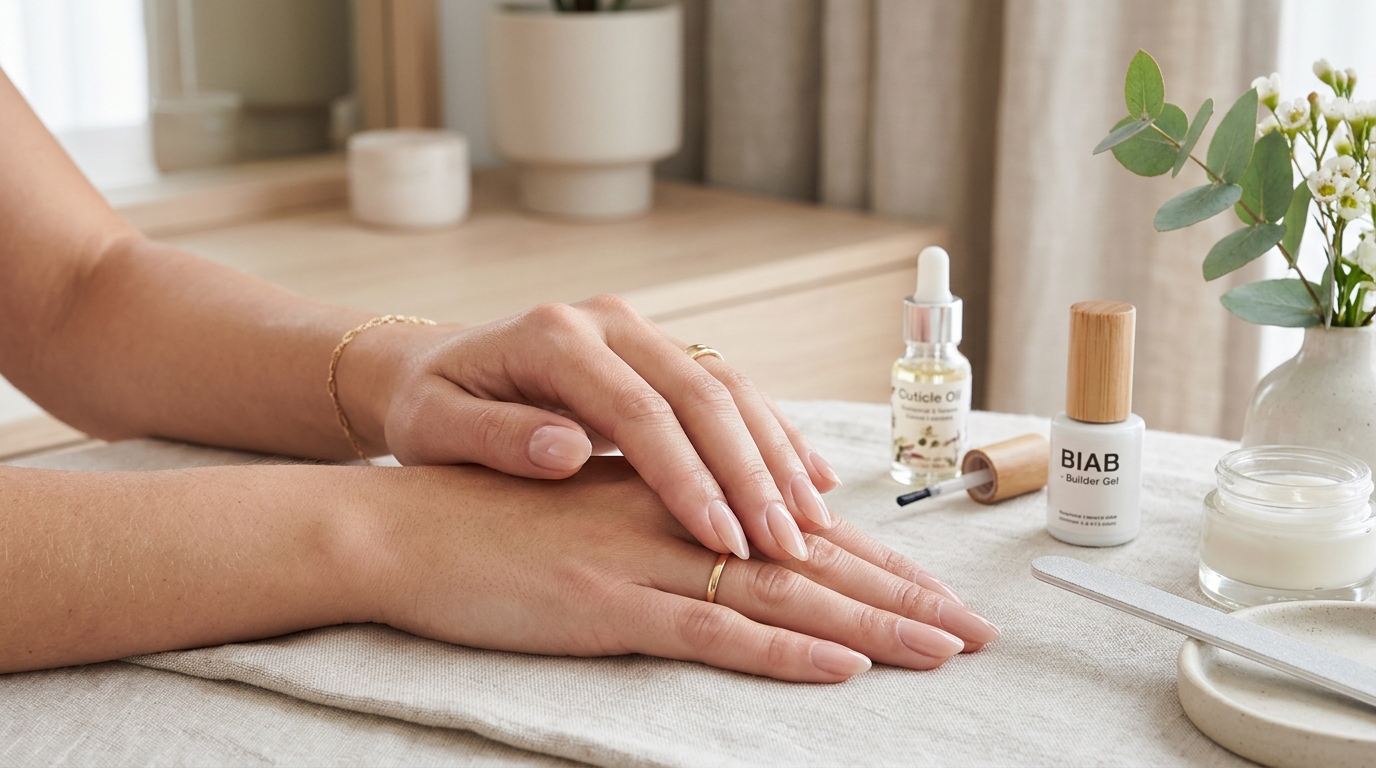
The Ultimate Guide to Builder Gel (BIAB): How to Grow Stronger, Longer Natural Nails
If you’ve ever felt like your natural nails are paper-thin, prone to snapping the second they grow past your fingertips, or constantly peeling in thin, sad layers, you are definitely not alone. For years, the nail world gave us two extreme choices: stick with weak, natural nails under a thin coat of regular polish, or surrender your nail health to heavy-duty acrylic extensions that leave your natural beds feeling raw and battered. Enter Builder Gel, widely known by its iconic nickname BIAB (Builder in a Bottle).
BIAB has completely revolutionized modern nail care. It is the ultimate bridge between natural nail care and high-performance durability. But what exactly is this magical gel, how does it work, and can it truly help you grow long, healthy, natural nails without damage? Let’s dive deep into the ultimate guide to builder gel and unlock the secret to bulletproof natural nails.
—
What Exactly is Builder Gel (BIAB)?
Builder gel is a high-viscosity, thick gel formulated to add structural strength, shape, and reinforcement to the natural nail. Unlike soft gel polishes that flow like water and only add color, builder gel acts like a self-leveling architectural overlay. It’s thick enough to build up a subtle curve (known as the apex) and strong enough to support significant length without cracking.
"BIAB" stands for Builder in a Bottle, a term originally trademarked by the brand The GelBottle Inc., though it has now become the standard shorthand for brush-on builder gels across the beauty industry. Instead of coming in hard-to-manage pots that require separate spatulas and brushes, modern BIAB comes conveniently packaged in a bottle with a built-in brush, making application precise, fast, and smooth.
BIAB vs. Standard Gel Polish: What's the Difference?
To understand why standard gel polish might be failing your long-nail dreams, think of standard gel polish as a thick coat of paint. It gives your nails flexibility and color, but zero structural support. If your natural nail bends under pressure, standard gel polish simply bends with it—often cracking or lifting at the edges.
Builder gel, on the other hand, is like reinforced armor. It creates a rigid yet flexible shield over your natural nail plate. While standard gel polish requires replacement every two weeks via complete removal, builder gel can be infill-maintained, meaning you don't have to strip down to your bare nail every time you visit the salon.
The Chemistry Behind the Reinforcement
Underneath the glossy surface, builder gel relies on tightly linked oligomer chains that cure under UV or LED light. When exposed to the correct wavelength, these liquid molecules snap together into a rigid, three-dimensional lattice structure. This unique matrix offers high impact resistance, meaning when you accidentally jam your finger against a desk or key in a doorway, the builder gel absorbs and distributes the force rather than letting your natural nail snap in half.
—
Why Your Natural Nails Keep Breaking (And How BIAB Fixes It)
Have you ever wondered why your nails seem to hit a "growth ceiling"? You get them to a decent length, and suddenly one snag ruins the entire set. Natural nails are composed of keratine layers that absorb and release water constantly. Every time you wash dishes, take a shower, or apply hand sanitizer, your nails swell with moisture and shrink as they dry. This constant expansion and contraction weakens the bonds between keratin layers, leading to peeling, flaking, and breakage.
The "Shielding" Effect: An Armor for Your Nails
Builder gel solves this issue by creating an impermeable barrier over the top of the nail plate. It shields the delicate keratin layers from excessive water absorption, chemical exposure, and mechanical stress. Think of BIAB as a raincoat and a sports helmet rolled into one sleek, gorgeous package. Underneath this durable shell, your natural nails are free to grow continuously without taking the brunt of everyday wear and tear.
—
The Major Benefits of Builder Gel for Natural Nail Growth
Why are nail tech experts and beauty enthusiasts so obsessed with BIAB? The proof is in the results. Here are the stand-out benefits that make builder gel the undisputed champ of natural nail retention:
Superior Strength and Flexibility
Hard acrylics are notoriously rigid. If you strike an acrylic nail hard enough, it often rips off your natural nail bed underneath—ouch! BIAB strikes the perfect balance. It is significantly stronger than soft gel, yet retains just enough natural micro-flexibility to bend with severe impacts rather than snapping your natural nail root.
Healing Damaged Nail Beds
If your nails are recovering from years of aggressive acrylic removal or over-filing, builder gel acts as an intensive care unit for your fingertips. By smoothing over uneven ridges, thinned spots, and deep grooves, it provides immediate painless reinforcement while new, healthy nail tissue grows out underneath.
Biting and Picking Cure?
For chronic nail-biters and skin-pickers, breaking the habit feels almost impossible. Builder gel is naturally thick and smooth around the edges, making it virtually impossible to bite through or find a rough corner to peel. Many former nail-biters credit BIAB as the single tool that finally broke their multi-decade habit.
—
Is Builder Gel Right for You? (BIAB vs. Acrylics vs. Dip Powder)
With so many nail enhancement options on the market, choosing the right system can feel overwhelming. Let’s see how builder gel stacks up against the old-school classics.
| Feature | Builder Gel (BIAB) | Traditional Acrylics | Dip Powder | | :— | :— | :— | :— | | Flexibility | Medium-High (Shock Absorbing) | Very Low (Rigid) | Low | | Damage Potential | Low (Soak-off or Infill) | High (Requires heavy buffing) | Moderate (Drying acetone soaks) | | Odour | Minimal | Very Strong (Liquid Monomer) | Mild | | Natural Look | Extremely Natural | Can look bulky | Can look thick | | Maintenance | Infill every 3–4 weeks | Infill every 2–3 weeks | Full removal every 2–3 weeks |
Builder Gel vs. Traditional Acrylics
Acrylics are created by mixing a liquid monomer with a powder polymer. This creates a fast-hardening mass that requires extensive electric filing during prep and removal. Acrylics are great for extreme dramatic extensions, but for natural nail growth, they can be needlessly heavy and damaging. BIAB uses light-cured gels that require minimal surface prep, preserving your precious natural nail layers.
Builder Gel vs. Dip Powder
Dip powder is essentially brush-on glue combined with acrylic powder. While it can feel strong, dip powder doesn't easily allow for structural reshaping or building an apex. Furthermore, dip powder usually requires full, aggressive acetone soaking every couple of weeks, which leaves natural nails dry, dehydrated, and brittle over time.
—
Step-by-Step: How a BIAB Overlay is Applied
Curious about what actually happens during a builder gel appointment? The process is meticulously designed to protect nail integrity while creating a flawless surface.
“ [1. Prep & Cuticle Care] ➔ [2. Dehydration & Primer] ➔ [3. Base & Slip Layer] ➔ [4. Apex Creation] ➔ [5. LED Cure & Refine] “
Step 1: Prep and Cuticle Care
Everything starts with detailed, non-aggressive prep. Cuticles are gently pushed back and cleaned off the nail plate. The shine is lightly removed from the natural nail using a high-grit (soft) buffer—never a harsh drill bit. This provides a microscopic texture for the gel to grip onto.
Step 2: The Base Layer and Slip Layer
After wiping the nail clean of oils using an alcohol-based dehydrator, a thin base coat (or a layer of the builder gel itself) is scrubbed into the nail plate and cured under an LED lamp. Next, the nail tech applies a thin, uncured "slip layer" of builder gel. This acts as a wet track that guides the thicker gel where it needs to go.
Step 3: Building the Apex
Here comes the magic! A larger bead of builder gel is placed near the middle of the nail and floated down toward the tip. The nail tech will often flip your hand upside down for a few seconds. Why? Gravity pulls the gel toward the center, naturally forming a beautiful, smooth dome.
What is the Apex and Why Does It Matter?
The apex is the highest point of stress on your nail plate—usually right around the middle where the pink nail bed meets the white free edge. Without an apex, a long nail will snap like a dry twig at the slightest pressure. By concentrating the gel thickness right over this stress point, the nail becomes structurally sound and resistant to breaking.
Step 4: Curing and Refining
Once the apex is shaped, the nail goes under a professional LED lamp for 60 seconds. Modern LED lamps ensure a deep, complete cure. After curing, any minor imperfections are lightly refined with a hand file.
Step 5: Top Coat or Nail Art
The best part about BIAB? It comes in a gorgeous array of milky nudes, soft pinks, and sheer tones that look stunning on their own. However, you can also paint traditional gel polish, chrome dust, or intricate nail art directly over the builder gel layer, finishing off with a high-shine top coat!
—
In-Salon vs. At-Home BIAB: Should You DIY?
With builder gel kits readily available online, it can be tempting to try DIY-ing your BIAB nails at home. While it might save a few bucks, working with builder gel requires genuine skill and caution.
- Heat Spikes: Builder gel cures through an exothermic (heat-releasing) chemical reaction. If applied too thick or cured under an improper lamp, it can cause intense burning sensations that damage the delicate nail bed.
- Allergies: Uncured gel resting on raw skin can trigger contact dermatitis or lifelong acrylates allergies. Nail techs are trained to keep gel strictly off the skin and cuticles.
- Improper Curing: Low-wattage Amazon lamps often fail to cure gel completely beneath the surface layer. Uncured gel trapped against your nail can cause severe fungal infections and allergic reactions over time.
If you are a beginner, it is strongly recommended to visit a certified nail technician for your first few sets to watch their technique and protect your nail health!
—
How to Maintain Your BIAB Nails for Maximum Growth
Congratulations, you’ve got your first set of builder gel! Now, how do you make sure your nails actually grow long beneath it? Proper home care is 50% of the equation.
The Importance of Regular Infills
One of the best features of builder gel is that you don't need to strip it off every time your nails grow out. Instead, you get an infill every 3 to 4 weeks. Your nail tech will simply file down the top surface, smooth out the growth area near the cuticle, and apply fresh builder gel over the new growth. This completely eliminates the damaging cycle of constant full-soak removals!
Cuticle Oil: The Secret Sauce
If you take only one piece of advice from this entire guide, let it be this: apply cuticle oil twice a day.
Cuticle oils rich in jojoba oil and vitamin E have tiny molecular structures that can penetrate through the matrix of the natural nail and skin. Cuticle oil keeps the natural nail underneath hydrated and flexible. When your natural nail is flexible beneath the gel, the two layers move together harmoniously. If your natural nail becomes bone-dry, it will curl away from the rigid gel, causing painful lifting and peeling.
“ Hydrated Natural Nail + BIAB Overlay = Unstoppable Growth & Zero Lifting “
Daily Habits to Protect Your Manicure
Even with armor on your nails, common sense goes a long way:
- Treat your nails as jewels, not tools: Don't use your fingertips to pry open soda cans, peel off stickers, or scrape off grime.
- Wear rubber gloves: Household cleaning chemicals and hot dishwater break down gel bonds over time and strip moisture from your hands.
- Never pick or peel: If you see a lifted corner, do not peel it off! Peeling gel pulls away top layers of your natural nail plate, leaving them thin, raw, and sensitive.
—
Safe Removal: How to Avoid Damaging Your Natural Nails
Eventually, there may come a time when you want to take your builder gel off completely. The cardinal rule of removal is simple: never force it off.
Safe removal involves gently breaking the top seal coat with a hand file, then soaking the nails in pure acetone using cotton balls and foil wraps for 15 to 20 minutes. As the builder gel softens into a crumbly texture, it can be gently pushed away with a wooden cuticle stick. If any stubborn patches remain, re-wrap the nail for another 5 minutes. Patience during removal is what preserves the natural health of your nails!
—
The Future of Nail Health in 2026
As nail care technology continues to evolve, builder gel formulations are becoming cleaner, safer, and stronger than ever before. Modern standard formulas are focusing heavily on HEMA-free chemistry (eliminating hydroxyethyl methacrylate, a common allergen) to ensure even the most sensitive skin types can enjoy long-lasting overlays.
Furthermore, builder gels infused with micro-fillers, botanical extracts, and peptide complexes are actively nourishing the keratin layers while they wear, turning builder gel from a purely cosmetic overlay into a true therapeutic nail-care treatment.
—
Final Thoughts: Your Journey to Long, Natural Nails
Growing long, strong natural nails isn't an impossible genetic lottery—it’s simply a matter of proper protection and consistent care. Builder gel (BIAB) offers the perfect balance of flexibility, structural strength, and low-damage maintenance, allowing your nails to thrive uninterrupted beneath a polished, gorgeous coat.
By keeping up with your 3-week infills, staying loyal to your daily cuticle oil routine, and treating your hands with care, you’ll be amazed at how quickly you can achieve the long, healthy natural nails of your dreams. Say goodbye to snapping and peeling, and welcome to your strong-nail era!
—
Frequently Asked Questions (FAQs)
1. Can builder gel ruin your natural nails?
No, builder gel itself will not ruin your natural nails. Nail damage occurs from improper prep (over-filing the natural nail), picking/peeling the gel off when lifted, or aggressive removal techniques. When applied, maintained, and removed properly by a trained professional, your natural nails will remain strong and healthy.
2. How long does BIAB last on natural nails?
BIAB typically lasts between 3 to 4 weeks without chipping, peeling, or lifting. Because your natural nails will grow significantly during this time, it is recommended to get an infill every 3 weeks to rebalance the apex and maintain structural stability.
3. Can you extend nail length with builder gel, or is it only for overlays?
While builder gel is primarily used as a protective overlay on natural nails, it can also be used with nail forms or tip extensions to add short-to-medium extra length. However, for extremely long dramatic extensions, traditional acrylic or hard builder gel in a pot is usually preferred.
4. Why do my nails feel like they are burning under the LED light during a BIAB service?
That warm or burning sensation is called an "exothermic reaction" or "heat spike." When builder gel cures under UV/LED light, the molecules quickly bond together, releasing energy as heat. If you have thin natural nails or if the gel was applied in a thick layer, you may feel this heat. If it hurts, simply pull your hand out of the lamp for 5 seconds until it cools down, then put it back in!
5. What is the difference between hard gel and BIAB (soft builder gel)?
BIAB is a semi-hard or soft builder gel that can be soaked off using pure acetone. Hard gel, on the other hand, is completely non-porous and cannot be soaked off with acetone—it must be 100% filed off by a professional. BIAB offers a softer, more flexible feel that is ideal for natural nail growth.
Post Comment