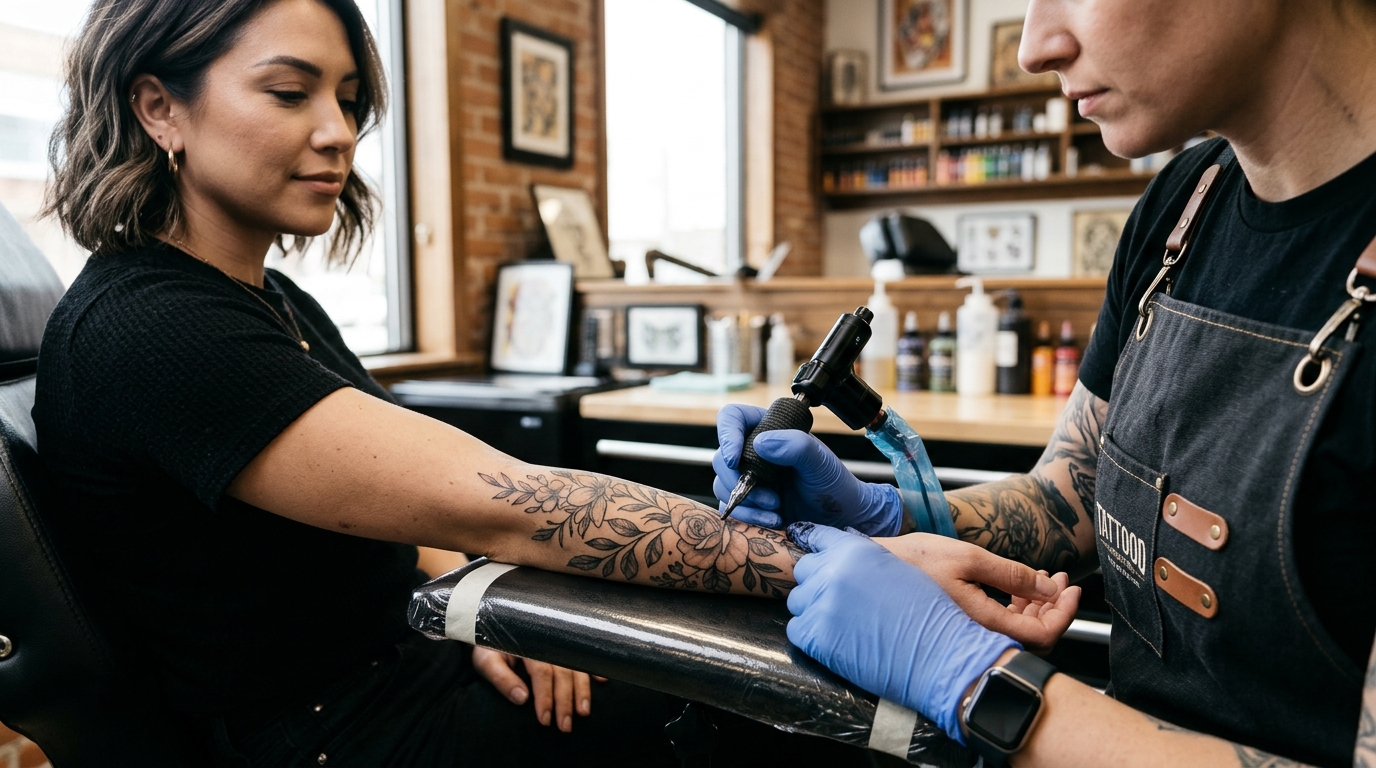
Tattoo Touch-Ups 101: When, Why, and How Often You Need One
You step out of the tattoo shop, gaze into the mirror, and fall absolutely in love with your fresh ink. It’s crisp, vibrant, and razor-sharp. But fast forward a few months—or maybe a few years—and you notice a tiny spot where the ink didn’t quite hold, or a line that lost a bit of its punch. Sound familiar? Don’t panic. Your tattoo isn’t ruined, and your artist didn’t mess up. You’ve simply arrived at a completely normal, rite-of-passage moment in the body art journey: the tattoo touch-up.
Tattoos live on a living, breathing, constantly renewing canvas. Unlike a canvas hanging in a climate-controlled museum, your skin moves, sheds, sweats, and absorbs sunlight every single day. Touch-ups are the secret weapon that keeps your body art looking as fresh and breathtaking as the day you got it. Whether you’re dealing with a brand-new piece that healed a little patchy or a ten-year-old favorite that needs a jumpstart, this comprehensive guide covers everything you need to know about timing, placement, costs, and care.
—
What Exactly Is a Tattoo Touch-Up?
Think of a tattoo touch-up as a routine tune-up for your body art. It’s not a complete redesign or a massive cover-up job. Instead, it’s a targeted micro-session where your artist goes back over specific areas of an existing tattoo to fix minor imperfections, refresh faded pigments, or sharpen softened edges.
When an artist touches up a piece, they aren't starting from scratch. They are filling in tiny microscopic gaps where ink flaked away during healing, re-saturating a shadow that turned out lighter than expected, or running a fine needle back over a line that thinned out.
How Touch-Ups Differ from a Full Tattoo Session
If a full tattoo session is like building a house from the ground up, a touch-up is like coming in with a fresh coat of trim paint and a few touch-up brushes to make the room pop. Touch-ups are usually much shorter—often taking anywhere from 15 minutes to an hour.
Because the artist is only targeting small, specific spots rather than outlining and shading an entire canvas, the skin undergoes far less total trauma during a touch-up. However, the physical process is identical: needles, ink, and a brief healing period.
—
Why Do Tattoos Need Touch-Ups in the First Place?
It’s easy to assume that once ink is under your skin, it stays locked in place forever without moving a millimeter. But skin anatomy is complex. When tattoo needles deposit ink into the dermis layer, your body’s immune system immediately goes to work treating those pigment particles like tiny invaders.
Here is why even the most expertly applied tattoos sometimes need a little extra love:
The Natural Healing Process
As your skin heals over the first few weeks, it forms thin scabs and dry layers that eventually peel off. During this shedding phase, it’s completely normal for tiny bits of ink pigment to settle unevenly. Your white blood cells are actively working to pull ink away, and as the top layers of skin regenerate, some areas naturally hold less pigment than others.
Ink Fallout and Color Fading
Certain colors are notoriously picky. While deep blacks and dark blues stick around like stubborn houseguests, pastel shades, light yellows, soft pinks, and white inks are far more delicate. They tend to break down faster under UV light and may heal slightly translucent depending on your natural skin undertones.
“ +------------------+-----------------------+------------------------+ | Ink Tone Group | Retention Level | Touch-Up Frequency | +------------------+-----------------------+------------------------+ | Blacks & Grays | High | Rare (5-10+ years) | | Deep Reds/Blues | Moderate-High | Low (3-7 years) | | Pastels & Yellows| Moderate-Low | Moderate (2-4 years) | | White Ink | Low (Turns clear/yellow)| High (1-2 years) | +------------------+-----------------------+------------------------+ “
Artist Technique and Needle Depth
Tattooing is a delicate balancing act. If an artist pushes the needle too deep, the ink spreads out into a blurry haze (known as a blowout). To avoid this, skilled artists err on the side of caution. They’d much rather tattoo slightly too shallow—knowing they can easily add more ink during a touch-up—than go too deep and permanently ruin a line.
Poor Aftercare Habits
Let’s be honest: aftercare isn't always perfect. Did you accidentally pick a scab while you were sleeping? Did your cat scratch your fresh ink? Did you spend a bit too much time under the bright summer sun before the skin fully closed? Any disruption to the healing skin can lift ink out before it sets into the dermis.
—
Recognizing the Signs: When Does Your Ink Need a Refresh?
How do you know if your tattoo actually needs a touch-up or if you’re just overthinking normal skin texture? Look closely at your tattoo under bright, natural light and run through this quick visual checklist.
Patchy Lines and Hollow Spots
Look at the solid black lines or heavily shaded blocks in your piece. Are there tiny white gaps, gray spots, or areas where the line looks broken or "hollow"? If a line looks like a printer running out of toner, that’s a clear sign of ink fallout that needs a quick touch-up.
Faded Colors and Dulled Blacks
Compare the color intensity of your tattoo to how it looked when the peeling phase ended. If bright reds have faded to muted corals, or if solid jet-black shading looks more like a cloudy graphite pencil, a color refresh will instantly restore that original high-contrast punch.
Blurred Edges: Blowouts vs. Natural Fading
It’s crucial to spot the difference between a tattoo that needs a touch-up and one that suffered a blowout.
- Faded/Thin Edges: The ink looks faint, broken, or washed out. Fixable with a touch-up!
- Blowout: The ink looks like a bluish smudged halo under the skin, spreading beyond the original line. Not fixable with a touch-up (adding more ink will only make it darker); blowouts usually require laser lightening or a clever cover-up design.
—
The Ideal Timeline: How Soon Is Too Soon?
Patience is everything when it comes to body art. You cannot—and should not—touch up a tattoo the moment you notice a tiny spot during the peeling phase.
“ [Day 1: Tattoo Done] ---> [Weeks 1-3: Peeling & Scabbing] ---> [Weeks 4-8: Dermal Settlement] ---> [Week 8+: Safe to Touch Up!] “
The Initial Healing Window (4 to 8 Weeks)
Your skin might look fully healed on the surface after two or three weeks, but the deeper dermal layers are still busy repairing themselves. Tattooing over skin that is still regenerating causes intense pain, increases the risk of permanent scarring, and usually results in even worse ink retention.
Always wait a minimum of 4 to 8 weeks after your initial session before going back for a touch-up. Give your body the time it needs to fully settle the original ink.
The Long-Term Maintenance Clock
What about older tattoos? Tattoos age right along with us. Most well-cared-for tattoos don't need their first major maintenance touch-up for 5 to 10 years. However, if you spend tons of time outdoors or have fine-line micro-tattoos, you might want a small polish every 3 to 5 years to keep details looking razor-sharp.
—
How Often Should You Touch Up Fresh or Old Ink?
There’s no single, universal rule for how often a tattoo needs care. It comes down to two major variables: placement and style.
High-Friction vs. Low-Friction Placement
Where your tattoo lives on your body plays a massive role in how often it will need fresh ink.
Hands, Fingers, and Feet
The skin on your hands, fingers, palms, and feet regenerates much faster than skin elsewhere on your body. Combine rapid cell turnover with constant handwashing, shoe friction, and sunlight, and you have a recipe for fast fading.
- Touch-up frequency: Hands and fingers often require 1 to 2 touch-ups in the first year alone, and regular maintenance every few years after.
Ribs, Upper Arms, and Low-Friction Spots
Areas like your outer biceps, forearms, thighs, upper chest, and back experience minimal daily friction and stay protected by clothing.
- Touch-up frequency: These areas rarely need touch-ups. One initial polish after 2 months is usually enough to keep them looking pristine for a decade.
Tattoo Style: Fine Line vs. Bold Traditional
The style of art you choose dramatically influences its longevity.
“ +----------------------+--------------------------+-----------------------+ | Tattoo Style | Characteristics | Longevity & Need | +----------------------+--------------------------+-----------------------+ | Fine Line / Micro | Ultra-thin lines, soft | Fades fast; requires | | | delicate details | frequent touch-ups | +----------------------+--------------------------+-----------------------+ | American Traditional | Thick bold outlines, | Ages amazingly well; | | | heavy saturated color | rarely needs work | +----------------------+--------------------------+-----------------------+ | Watercolor | Soft gradients, no black | Fades soft; needs | | | hard outlines | color re-saturation | +----------------------+--------------------------+-----------------------+ “
As the old industry saying goes: "Bold holds!" Micro-tattoos and delicate single-needle script look gorgeous and dainty, but they naturally lose crispness much faster than a bold, heavy-outlined traditional piece.
—
Sun Exposure and Environmental Factors
If UV rays can break down tough materials like plastic and outdoor furniture, imagine what they do to tiny pigment particles lying under a thin layer of human skin. Ultraviolet light breaks down ink molecules, allowing your body's lymphatic system to sweep them away.
If you spend your summers sunbathing without SPF, your tattoos will age twice as fast. Want to drastically reduce how often you need touch-ups? Make broad-spectrum SPF 50 sunscreen a non-negotiable part of your daily routine once your tattoo is fully healed.
—
Does a Tattoo Touch-Up Cost Money?
Money questions make everyone a little nervous, but tattoo etiquette here is pretty straightforward once you understand how artists operate.
Free Touch-Up Policies and Courtesy Rules
Most professional tattoo artists offer one free touch-up within a specific window—usually between 60 to 90 days after your initial session. They take immense pride in their work and want to make sure the finished piece looks flawless in your skin.
However, there are a few important exceptions to the "free touch-up" custom:
- Neglected Aftercare: If you went swimming in a dirty lake, got a severe sunburn, or intentionally picked your scabs against your artist’s explicit instructions, expect to pay the artist’s standard hourly or minimum shop rate.
- High-Fading Spots: Many artists clearly state beforehand that they do not offer free touch-ups on fingers, hands, feet, or inner lips because fading in those areas is guaranteed by human biology.
- Decades-Old Tattoos: If you’re coming back seven years later wanting to refresh a piece, that’s standard wear-and-tear maintenance. You will pay the artist’s regular rate for their time and supplies.
Pro-Tip: Even if your touch-up session is totally free under your artist's shop policy, always tip your artist cash for their setup time, sterile needles, and expertise!
—
The Touch-Up Session: What to Expect and Aftercare Tips
So, you’ve scheduled your touch-up! What happens now?
Pre-Touch-Up Prep
Treat your touch-up prep exactly like you did your initial tattoo appointment:
- Get a solid night of sleep before your appointment.
- Hydrate well and eat a good meal an hour before walking into the shop.
- Moisturize the area (up until the day of the tattoo) so the skin is supple.
- Never show up with a fresh sunburn on the area—your artist will have to reschedule you!
Touch-Up Aftercare 101
Do not treat a touch-up carelessly just because it was a short 20-minute session. Your skin was punctured by needles, which means you have a fresh open wound that is vulnerable to bacteria.
- Wash Gently: Wash the area twice daily with fragrance-free, antibacterial soap and lukewarm water.
- Moisturize Lightly: Apply a tiny, paper-thin layer of unscented lotion or tattoo balm. Do not suffocate the skin in heavy ointments.
- Hands Off: Let any small flakes or tiny micro-scabs fall off entirely on their own. No picking, no scratching!
- Avoid Submersion: Stay out of hot tubs, swimming pools, oceans, and long bath soaks for at least two to three weeks.
—
Conclusion
Tattoos are living art that evolves right alongside your body. Needing a quick touch-up isn't a sign of a failed tattoo—it’s simply part of the natural process of carrying artwork in living skin. By giving your original tattoo plenty of time to heal, paying attention to placement and style, protecting your skin from the sun, and working closely with your artist, you can keep your body art looking bold, vibrant, and stunning for decades to come.
Got a spot on your ink that's looking a little pale? Take a clear photo in natural light, reach out to your artist, and get that quick tune-up on the schedule!
—
Frequently Asked Questions (FAQs)
1. Does getting a tattoo touch-up hurt as much as the original session?
Because touch-ups are usually much faster and cover smaller areas of skin, most people find them far easier to handle than the initial tattoo session. However, tattooing over freshly healed skin or delicate line work can feel a bit spicy. The good news? It’s over before you know it!
2. Can I get a touch-up from a different tattoo artist?
It is always best to go back to the original artist who designed and executed the piece, as they know their own ink mixes and needle techniques. However, if you’ve moved away, or if you had a poor experience, another reputable artist can certainly touch it up. Just keep in mind that a new artist will charge their standard shop rate or hourly fee.
3. How long after getting a tattoo can I get a touch-up?
You should wait at least 4 to 8 weeks before getting a touch-up. Even if the skin looks completely healed on the surface, the deeper layers are still repairing themselves. Tattooing too early can cause permanent scarring and poor ink retention.
4. Will a touch-up fix a completely ruined or blown-out tattoo?
A touch-up can easily fix faded color, uneven lines, and patchy spots. However, it cannot fix a blowout (where ink bleeds beneath the skin creating a blurry halo). Blowouts require standard laser removal, laser lightening, or a full cover-up design that cleverly hides the blurred ink.
5. How many times can a single tattoo be touched up?
There is no set limit on how many times a tattoo can be touched up over your lifetime, as long as the skin remains healthy and free of deep scar tissue. However, touching up a piece too frequently (e.g., every few months) can overwork the skin, leading to rough skin texture and severe ink blowouts.
Post Comment