How to Choose Between a Skin Tint and Tinted Moisturizer for Your Skin Type and Desired Finish
Choose a skin tint if your main priority is tone correction in a thin, weightless fluid that layers over your established skincare routine without adding excess oil. Choose a tinted moisturizer if your skin requires ongoing hydration throughout the day and you want a single product to replace daytime lotion while adding a subtle wash of color.
Skin tints feature suspended pigments in fluid vehicles, making them adaptable across oily, combination, and normal skin types. Tinted moisturizers build pigment into rich emollient creams, making them best suited for dry, dehydrated, or mature complexions that need continuous barrier support.
How the Formulas Differ in Practice
While both products provide lighter coverage than traditional liquid foundation, their underlying formulations serve distinct purposes on the skin.
Skin tints are low-viscosity fluids formulated with a higher ratio of pigment relative to occlusive lipids. The fluid base typically relies on water, volatile silicones, or lightweight plant oils that evaporate or set down quickly after application. As the liquid sets, the pigment lays flat against the skin surface. This thin layer lets you obscure mild redness and dark spots without adding heavy cream layers, preventing your base from breaking down when worn over sunscreen or serums.
Tinted moisturizers are emulsion lotions or creams carrying low concentrations of iron oxides and titanium dioxide pigments. Their primary job is acting as a daytime moisturizer that includes pigment. Key ingredients usually center on humectants like glycerin and hyaluronic acid alongside emollients such as squalane, shea butter, or plant oils. Because these emollient ingredients stay active on the skin surface, the product maintains a soft, flexible moisture barrier. However, this high lipid content limits how much pigment can be added without destabilizing the emulsion, meaning tinted moisturizers diffuse minor discoloration rather than building up to medium coverage.
Matching Your Base to Your Skin Type
Selecting between these two formulas depends on how your skin manages moisture and oil production throughout the day.
Oily and Acne-Prone Skin
Oily complexions generally perform best with fluid skin tints. Rich tinted moisturizers contain higher levels of emollients and fatty alcohols that mix with natural sebum, often causing mid-day shine, product slippage, or clogged pores. Oil-free or soft-matte skin tints adhere more effectively to oil-prone areas like the forehead, nose, and chin, allowing you to evening out skin tone without introducing heavy lipids.
Dry and Dehydrated Skin
Dry skin absorbs moisture rapidly, which can cause thin fluid skin tints to settle into dry patches or highlight flaking if the skin is not thoroughly prepped with heavy creams first. Tinted moisturizers supply an ongoing emollient barrier that keeps dry areas soft and flexible. The hydrating base keeps pigment from clinging to dead skin cells, helping dry complexions maintain a smooth appearance throughout wear.
Combination Skin
Combination skin requires target control. Applying a skin tint over your customized morning skincare gives you strategic flexibility: you can apply a rich moisturizer strictly to dry cheeks while letting the fluid tint set cleanly on an oily T-zone. In contrast, applying a heavy tinted moisturizer all over combination skin often leads to premature breakdown across the center of the face.
Sensitive or Reactive Skin
Sensitive complexions often react poorly to multi-tasking base products. Tinted moisturizers frequently incorporate extra active ingredients such as chemical sunscreen filters, botanical extracts, or fragrance compounds to enhance skincare claims. While convenient, combining multiple active ingredients in a single coverage product increases the risk of contact irritation. A minimalist skin tint applied over a proven, non-irritating daily moisturizer is typically safer for reactive skin.
Finish, Coverage, and Performance Comparison
The structural differences between skin tints and tinted moisturizers determine how they look, how much coverage they offer, and how they behave over time.
| Feature | Skin Tint | Tinted Moisturizer |
|---|---|---|
| Primary Function | Tone evening and weightless spot coverage | Hydration replenishment with subtle tint |
| Base Viscosity | Ultra-thin fluid, serum, or light liquid | Lotion, cream, or rich emulsion |
| Pigment Density | Sheer to buildable light-medium | Very sheer to translucent |
| Best Fit Skin Types | Oily, combination, normal, and textured skin | Dry, dehydrated, and mature skin |
| Typical Finish | Satin, natural, soft matte, or radiant | Dewy, glossy, or high-moisture sheen |
| Wear Behavior | Sets down flat; holds shape with setting powder | Stays emollient; moves easier with oil and sweat |
How to Prevent Pilling and Product Separation
Pilling occurs when ingredients in your makeup clash with underlying skincare layers, causing the base product to ball up and roll off the skin. Preventing this requires matching vehicle bases and pacing your application steps.
Align Base Ingredients
Examine the ingredient list of both your broad-spectrum sunscreen and your base makeup. If your sunscreen is water-based, pairing it with a skin tint containing high concentrations of silicones (ingredients ending in -siloxane or -methicone) can cause the formula to slide or pill. Match water-based skincare with water-based tint formulas, and use silicone-rich tints over silicone-based sunscreens.
Allow Skincare Film to Form
Never apply a skin tint or tinted moisturizer immediately after your morning moisturizer or sunscreen. Give your sunscreen 3 to 5 minutes to form its protective film on your face. Rubbing a coverage product over wet sunscreen breaks down the protective emulsion, leading to patchy coverage and compromised sun defense.
Tailor Application Techniques
- Skin Tints: Dispense fluid tints onto your fingertips, warm the liquid briefly, and press or pat it into the skin. A damp micro-pore makeup sponge also distributes fluid formulas evenly. Stiff, dense makeup brushes can drag thin liquids across the face, leaving visible streak lines.
- Tinted Moisturizers: Apply like a standard daytime facial cream using warm hands. Gentle smoothing motions help melt the emollient base into dry areas, blending the soft tint evenly across the face.
Daily Routine Cost and Practical Value
Deciding between these options also requires evaluating routine flexibility and cost per wear. An all-in-one product can streamline morning steps, but a modular routine offers better control across changing seasons.
Worked Hypothetical Cost Scenario
To evaluate real-world costs, consider two hypothetical daily routine configurations over a 100-day period.
Option A: The All-in-One Tinted Moisturizer Routine
- Product assumptions: One 50 ml (1.7 fl oz) bottle of tinted moisturizer priced at $36.00.
- Daily application rate: 0.5 ml per application (provides 100 total applications).
- Dedicated morning moisturizer cost: $0.00 (the tinted moisturizer handles hydration).
- Cost formula: Total Product Cost / Total Days of Use = Daily Cost Per Wear.
- Daily cost calculation: $36.00 / 100 days = $0.36 per daily wear.
Option B: The Modular Skin Tint Routine
- Product assumptions: One 30 ml (1.0 fl oz) bottle of fluid skin tint priced at $30.00 (used at 0.3 ml per application = 100 applications, costing $0.30 per day). One 50 ml tube of daily moisturizer priced at $20.00 (used at 0.5 ml per application = 100 applications, costing $0.20 per day).
- Dedicated morning moisturizer cost: $20.00 / 100 days = $0.20 per day.
- Cost formula: (Skin Tint Daily Cost) + (Moisturizer Daily Cost) = Daily Cost Per Wear.
- Combined daily cost calculation: $0.30 + $0.20 = $0.50 per daily wear.
Option A yields a lower daily cost per wear, but it limits your adaptability. If your skin produces more oil during warm summer months, a rich tinted moisturizer may become too emollient, requiring you to purchase a lighter base product anyway. Option B costs slightly more per day but allows you to swap your underlying moisturizer as seasons change while keeping the same coverage product year-round.
Practical Steps to Make Your Final Choice
When choosing a formula, follow these steps to ensure the product matches your routine:
- Audit your current morning skincare: If you already have a morning moisturizer and broad-spectrum sunscreen that you love, choose a skin tint so you do not add unnecessary emollient layers over your face.
- Identify your main objective: If your skin feels tight or dry by midday, choose a tinted moisturizer. If your main goal is tone correction, light spot coverage, or shine control, choose a skin tint.
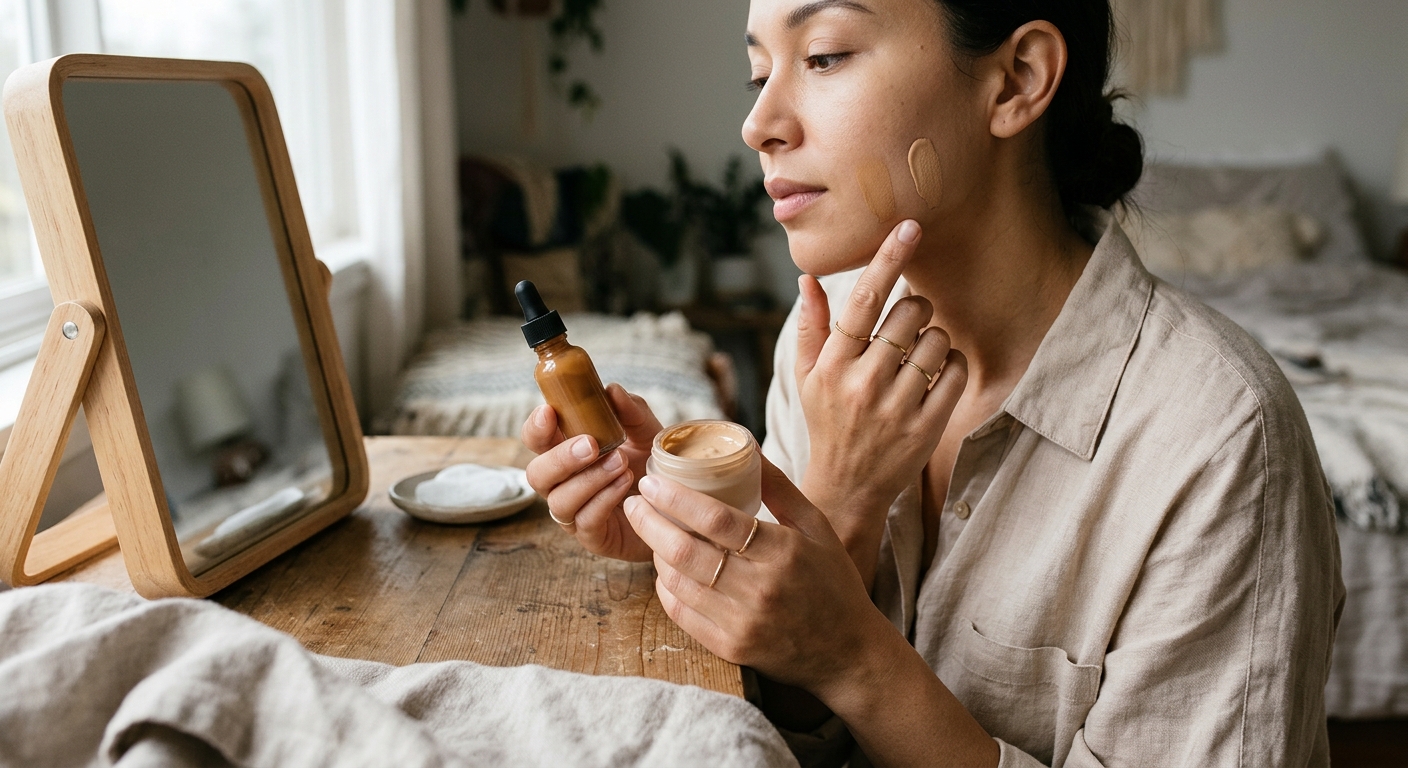
- Patch test in natural light: Apply a small sample along your jawline and wait 20 to 30 minutes. Check your skin in natural daylight to confirm that the shade does not oxidize (darken as it sets) and that the pigment does not settle into fine lines or dry patches.
Post Comment