How to Choose the Right Tattoo Artist for Your Style: A Complete Guide
So, you’ve finally decided on the perfect tattoo concept. Maybe it’s a sprawling botanical sleeve, a tiny minimalist crescent moon, or a hyper-realistic portrait of your beloved cat. You’re excited, and honestly, a little impatient to get under the needle. But before you rush into the nearest shop and throw your money at the first person holding a tattoo machine, let’s take a collective deep breath. Getting a tattoo isn't like buying a new jacket; you can't just return it if the fit is weird. This is permanent, living art on your skin. The single most important decision you will make in this entire process—yes, even more important than the design itself—is choosing the right tattoo artist.
In this comprehensive guide, we are going to walk through exactly how to find, vet, and collaborate with the perfect artist for your unique vision. Let’s make sure your next tattoo is something you’ll show off with pride for the rest of your life.
Why Your Tattoo Artist is More Important Than the Design
Think of your tattoo design as a musical score. You could have a beautiful, complex masterpiece written on paper, but if you hand it to someone who has never played the piano, the result is going to be a chaotic mess. On the flip side, a master pianist can take a simple nursery rhyme and turn it into something breathtaking.
Your tattoo artist is that pianist. They aren't just tracing a stencil; they are translating a concept onto a three-dimensional, curved, breathing canvas that stretches, bleeds, and heals. A great artist knows how to work with your body's natural contours, how deep to implant the ink so it doesn't blowout, and how to design a piece that will still look incredible decades from now. If you compromise on the artist, you compromise on the entire tattoo.
Step 1: Decoding Your Personal Tattoo Style
Before you can find the right artist, you need to speak the language of tattooing. You wouldn't walk into a five-star sushi restaurant and order a wood-fired pizza, right? Similarly, you shouldn't ask a traditional American tattooer to do a delicate watercolor piece. Let's break down the most popular tattoo styles you'll encounter today.
Traditional vs. Neo-Traditional
If you love bold black outlines, saturated primary colors, and iconic imagery like anchors, daggers, and swallows, you’re looking at American Traditional (often called "Old School"). It’s a timeless style built to last.
Neo-Traditional takes those same bold rules but injects a modern twist. Think more complex color palettes, illustrative shading, three-dimensional depth, and subjects ranging from art nouveau portraits to whimsical fantasy creatures.
Realism and Micro-Realism
Do you want a tattoo that looks exactly like a photograph? That’s Realism. Artists who specialize in this style are masters of light, shadow, and texture. They rarely use hard black outlines; instead, they build form using gradients of black and grey or full color.
In 2026, Micro-Realism continues to be incredibly popular. These are tiny, highly detailed portraits or landscapes that look like they belong in a museum. However, they require an absolute specialist who understands how to pack detail into a small space without it turning into a blurry smudge as it ages.
Fine Line and Minimalist
If your aesthetic is delicate, elegant, and understated, Fine Line is your calling. Utilizing single needles, these artists create incredibly thin, crisp lines that look like they were drawn with a mechanical pencil. This style is perfect for delicate florals, geometric patterns, and tiny script. It requires an incredibly steady hand—there is absolutely zero room for error when the lines are this thin.
Japanese Irezumi
Steeped in centuries of history, Irezumi is a highly structured style featuring traditional motifs like dragons, koi fish, geishas, and cherry blossoms. These pieces are designed to flow seamlessly across large areas of the body, often forming full sleeves or backpieces. The composition, color theory, and symbology in Japanese tattooing are incredibly specific, so finding an artist who has dedicated their life to studying this craft is essential.
Blackwork and Tribal
If you want to make a bold, graphic statement, Blackwork might be your vibe. This style uses heavy blocks of solid black ink to create abstract patterns, dark illustrative art, or ornamental designs. It also encompasses modern adaptations of traditional Polynesian, Maori, or Celtic tribal patterns. It requires a patient artist who can saturate large areas of skin evenly without causing excessive trauma.
Step 2: The Digital Treasure Hunt (Where to Look)
Now that you know what style you’re aiming for, it’s time to start hunting. Gone are the days of walking into a shop and flipping through physical binders of "flash" art on the counter. Today, the world is your digital oyster.
Mastering the Instagram Algorithm
Instagram is the ultimate living portfolio for tattoo artists. To find local talent, start by using specific hashtags. Instead of searching #tattoo, which will give you millions of random global results, narrow it down. Try #chicagotattooartist, #finelinetattoolondon, or #tokyotattoo.
When you find a piece you love, look at who tagged the artist. Check out the artist’s profile, but don’t just look at their top pinned posts. Scroll down. Look at their daily output. Save your favorite designs into a dedicated Instagram collection folder so you can spot patterns in what you are naturally drawn to.
Beyond Social Media: Portfolios and Directories
While Instagram is great, don't ignore dedicated tattoo directories and studio websites. Websites like Tattoodo or local shop directories offer curated lists of verified artists. Furthermore, attending a local tattoo convention is like speed-dating for tattoo enthusiasts. You can see dozens of artists working live, browse their portfolios in person, and chat with them in a casual setting.
Step 3: Reading Between the Lines of a Portfolio
An artist's portfolio is their resume, but you need to know how to read it critically. Anyone can make a tattoo look decent with a heavy filter, a ring light, and a bit of digital contrast tweaking. You want to look for raw, honest artistry.
Spotting the Difference Between Fresh and Healed Work
This is the golden rule of choosing a tattoo artist. A fresh tattoo always looks vibrant, sharp, and high-contrast because the ink is sitting in the top layers of the skin, mixed with a little bit of blood and redness. But how does it look six months later?
Look for a dedicated "Healed" highlight reel or folder on the artist’s profile. A great artist is proud of their healed work. Healed photos tell you the truth: did the fine lines spread? Did the color stay saturated, or did it fade patchy? If an artist only posts fresh, freshly-wiped tattoos, proceed with caution.
Red Flags in Portfolio Photos
Keep your eyes peeled for these warning signs:
- Wobbly lines: Do the straight lines look shaky, or do circles look like lumpy potatoes?
- Blowouts: Do you see a blueish, blurry halo around the lines? This means the artist pushed the needle too deep into the fat layer of the skin.
- Over-edited photos: If the skin around the tattoo looks completely airbrushed and greyed out to hide redness, the artist might be compensating for a rough hand or poor color blending.
- Inconsistent style: If their feed jumps from incredible realism to terrible traditional work, they might be stealing photos or still trying to find their footing.
Step 4: The Vibe Check (Consultation and Studio Hygiene)
You’ve found an artist whose work makes your heart skip a beat. Now, it’s time to meet them. A tattoo is an intimate experience; you’re going to be sitting close to this person, often in a state of vulnerability or pain, for hours. The vibe needs to be right.
Why a Consultation is Non-Negotiable
Most reputable artists will require or strongly recommend a consultation before booking the actual tattoo session. This is your chance to pitch your idea, discuss placement, size, and budget.
Pay attention to how they treat you. Do they listen to your ideas, or do they dismiss them? Are they excited about the project? A great artist will be honest with you. If they tell you, "Hey, that tiny detail won't age well on your wrist, let's make it slightly larger," they aren't being difficult—they are looking out for your future self.
What a Clean, Safe Shop Actually Looks Like
When you walk into the studio, put your detective hat on. Hygiene isn't just important; it’s a matter of medical safety.
- Is it clean? The shop should look and smell more like a medical clinic than a dusty garage.
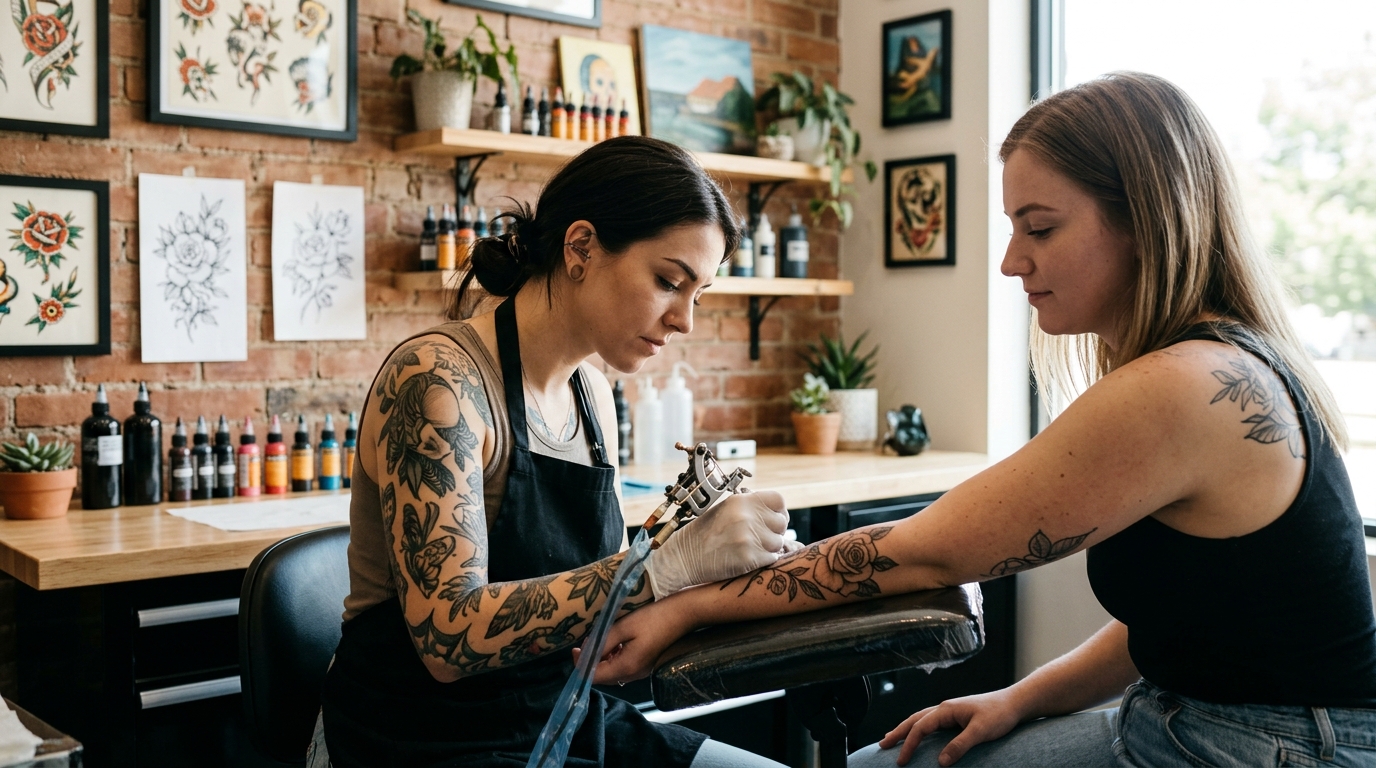
- Are they using barriers? All equipment, including the tattoo machine, power supply, armrests, and chairs, should be wrapped in single-use plastic barrier film.
- Are the needles sterile? The artist must open brand-new, blister-packed sterile needles right in front of you.
- Do they wear gloves? They should be wearing fresh gloves and changing them every single time they touch something outside of the sterile field (like their phone or a trash can).
Step 5: Understanding the Price Tag
Let’s talk about money. There is an old, famous saying in the industry: "Good tattoos aren't cheap, and cheap tattoos aren't good."
Hourly Rates vs. Flat Fees
Most experienced artists charge by the hour, with rates in 2026 ranging anywhere from $150 to $350+ per hour depending on their experience, demand, and location. For larger pieces like sleeves, they might offer a flat day rate.
When you pay for a tattoo, you aren't just paying for the time you're in the chair. You are paying for their years of training, their expensive sterile equipment, the hours they spent drawing your custom design beforehand, and their business overhead.
Why Cheap Tattoos Are Always a Bad Idea
If an artist offers to do a massive, detailed piece for fifty bucks in their living room, run away. Best case scenario? You end up with an ugly tattoo that costs thousands of dollars to cover up or laser off later. Worst case scenario? You end up in the hospital with a severe skin infection or a bloodborne pathogen. Save your money, wait a little longer, and invest in quality. Your skin deserves the best.
Step 6: Communication and Trust
Once you’ve booked your appointment and paid your deposit, it’s time to trust the process. You hired this artist because you love their specific style and expertise.
When they show you the design on the day of your appointment, look at it carefully. If you want a change, speak up! A professional artist will not get offended if you ask to adjust the size, shift the placement, or tweak a color. They want you to love it. However, once you both agree on the stencil and it’s applied to your skin, take a step back and let them do what they do best.
Conclusion
Choosing the right tattoo artist is a journey of research, patience, and intuition. It’s about finding that perfect intersection of artistic style, technical skill, professional hygiene, and personal connection. By taking the time to decode your style, analyze portfolios critically, and prioritize safety and communication, you aren't just getting a tattoo—you are curating a masterpiece that you will wear proudly for the rest of your life. So, do your homework, trust your gut, and get ready to bring your vision to life!
Frequently Asked Questions
How far in advance should I book a popular tattoo artist?
It depends on the artist's demand. Some highly sought-after artists only open their books a few times a year and can be booked out for six months to a year in advance. Others might have openings within a few weeks. It’s always best to check their social media bio or website for booking status.
Is it rude to ask a tattoo artist to change their design?
Not at all! This is going on your body forever. Reputable artists expect some feedback and are happy to make reasonable adjustments to size, placement, or minor details. However, completely changing your concept on the day of the appointment is a red flag and may result in losing your deposit.
Can I ask an artist to copy another artist's tattoo design?
Absolutely not. Copying another artist's custom work is considered plagiarism and is highly frowned upon in the tattoo community. Instead, you can show the photo as inspiration to explain what elements, colors, or vibes you like, and ask your artist to create a unique custom design just for you.
How much should I tip my tattoo artist?
In North America, tipping is standard practice and greatly appreciated. A standard tip is typically 15% to 20% of the total cost of the tattoo, similar to restaurant service. If you are in a country where tipping isn't customary, a small thoughtful gift or a glowing online review is a great way to show appreciation.
What should I do if I feel uncomfortable during the tattoo session?
Speak up immediately. Whether you are feeling lightheaded, need a bathroom break, find the pain overwhelming, or feel uncomfortable with how the artist is interacting with you, communicate clearly. A professional artist will gladly pause, offer you water, or adjust their setup to ensure you feel safe and comfortable.
Post Comment