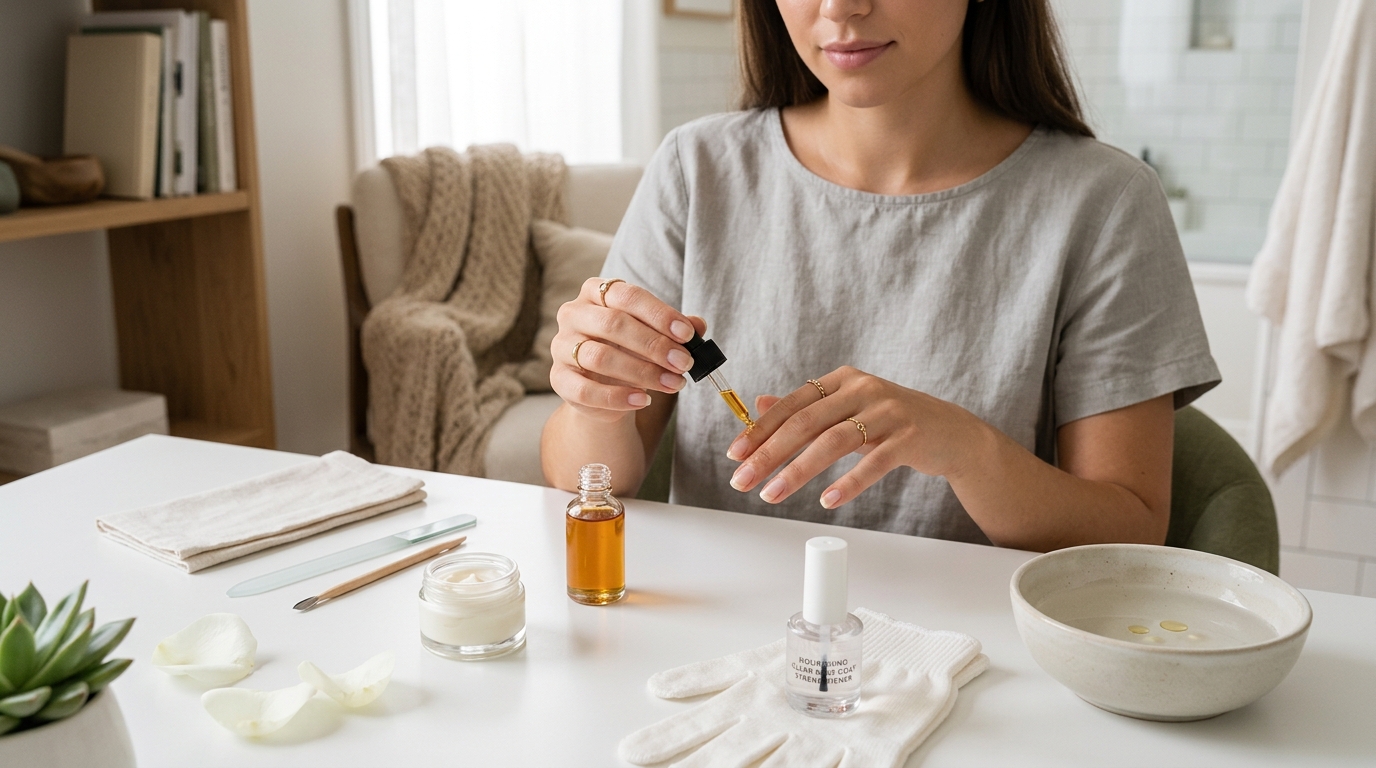
10 Easy Nail Care Tips for Stronger, Healthier Nails at Home
Have you ever looked down at your hands mid-sentence and instantly wanted to hide them in your pockets? We’ve all been there. Maybe it’s a jagged edge that’s been catching on your favorite sweater, or perhaps your nails have become so thin and bendy they feel like wet paper. In a world where we use our hands for absolutely everything—from typing out endless emails to showing off our latest jewelry—our nails are constantly on display. But keeping them looking pristine doesn't mean you need to spend half your paycheck at a high-end salon every two weeks.
As we embrace the clean, minimalist beauty aesthetics of 2026, the focus has shifted from heavy, damaging acrylic overlays to celebrating and nurturing our natural nails. The secret to those effortlessly chic, strong, and glowing nails you see all over your feed isn’t a magic potion; it’s a collection of simple, intentional habits you can easily practice at home. Let’s dive into ten easy, transformative nail care tips that will turn your brittle nails into your favorite accessory.
—
Why Your Nails Deserve a Little Extra Love
Before we jump into the "how," let’s talk about the "why." Your nails are far more than just a canvas for the latest trending polish color. They are actually made of layers of a protective protein called keratin, which is the same stuff that makes up your hair. Think of your nails as a shield for the highly sensitive nerve endings in your fingertips.
When your nails are weak, peeling, or constantly breaking, it’s often a sign that their protective barrier has been compromised. Treat them with the same respect and care that you give to your skincare routine. After all, you wouldn’t dream of going days without moisturizing your face, so why leave your hands out in the cold? Taking care of your nails is an act of self-care that pays off every single time you look down at your hands.
—
Tip 1: Keep Them Clean and Dry
It sounds incredibly basic, doesn’t it? But keeping your nails clean and dry is the absolute foundation of good nail health. When dirt and bacteria accumulate under the nail bed, they can lead to nasty infections that weaken the nail structure from the inside out.
However, there is a catch. While cleaning is essential, exposing your nails to water for too long is actually one of their biggest enemies.
The Danger of Prolonged Moisture
Have you ever noticed how soft and bendy your nails get after a long, hot bath or a marathon dishwashing session? That’s because nails are incredibly porous. They absorb water like a sponge. When water enters the nail plate, it causes the delicate layers of keratin to expand.
As your nails dry out, those layers contract and shrink back to their original size. This constant cycle of stretching and shrinking severely weakens the bonds between the nail layers, leading to peeling, splitting, and ultimate brittleness. To combat this, always dry your hands thoroughly after washing them, and avoid letting your hands soak in water unnecessarily.
—
Tip 2: The Golden Rule of Moisturizing
If you only take one single tip away from this guide, let it be this one: moisturize, moisturize, and then moisturize some more. Just like your skin, your nails and cuticles need hydration to stay flexible and resilient. Dry nails are brittle nails, and brittle nails snap at the slightest bump.
Why Cuticle Oil is Your Best Friend
While a good hand cream is great for the skin on your palms and knuckles, it often has molecules too large to deeply penetrate the tough nail plate. This is where cuticle oil steps in as your ultimate savior.
Cuticle oils, especially those formulated with lightweight, deeply penetrating oils like jojoba, sweet almond, or apricot kernel oil, can actually slip between the keratin layers of your nail. Jojoba oil is particularly magical because its molecular structure is incredibly similar to our skin’s natural sebum. By massaging a drop of cuticle oil into your nail beds and cuticles once or twice a day, you create a flexible, nourished nail that bends under pressure instead of snapping in half. Keep a bottle on your nightstand and one at your desk—consistency is your superpower here!
—
Tip 3: File Wisely, Not Wildly
Filing your nails seems straightforward enough, but it’s actually an area where many of us unknowingly cause massive damage. If you’re using your nail file like a handsaw—zipping it back and forth furiously in both directions—it’s time to stop and take a deep breath.
The One-Direction Filing Trick
When you file back and forth, you create microscopic tears and jagged edges along the tip of your nail. These tiny tears act as starting points for peels and splits. Instead, always file your nails in one single direction. Start from the outer corner and glide the file smoothly toward the center, lift the file off the nail, and repeat. It takes a tiny bit more patience, but your nails will thank you for it.
Additionally, pay attention to the type of file you’re using. Those cheap, coarse emery boards can be incredibly harsh on natural nails. In 2026, the gold standard is the glass or crystal nail file. Glass files have an ultra-fine, etched surface that gently grinds down the nail edge, sealing the keratin layers together as you file to prevent future peeling. Plus, they last forever and are incredibly easy to sanitize!
—
Tip 4: Say Goodbye to Harsh Chemicals
We live in an era where we are highly conscious of what we put on our skin, but we often forget to check the ingredient lists on our nail products. Many traditional nail polishes, hardeners, and removers are packed with harsh chemicals that strip away the natural oils and moisture that keep our nails strong.
Navigating the World of Acetone-Free Removers
Pure acetone is a miracle worker when you need to strip away stubborn glitter or soak off gel polish, but using it regularly on natural nails is like pouring rubbing alcohol all over your face—it completely dehydrates the area.
Switching to an acetone-free nail polish remover is an easy upgrade that makes a world of difference. Modern, non-acetone removers are often infused with nourishing ingredients like soy, vitamin E, and essential oils. They might take a few extra seconds of rubbing to lift your polish, but they leave your nails feeling soft and conditioned rather than chalky and dry. Also, keep an eye out for polishes labeled "10-Free" or "15-Free," which means they are formulated without toxic chemicals like formaldehyde, toluene, and dibutyl phthalate (DBP).
—
Tip 5: Give Your Nails a Breathing Break
We all love a gorgeous, glossy manicure that perfectly coordinates with our outfits. But constantly wearing polish, gels, or extensions without a break can trap moisture underneath and starve your nail plate of oxygen and light.
Spotting the Signs of Polish Fatigue
How do you know if your nails are crying out for a breather? Look out for white, chalky patches on the surface of your nails after you remove your polish. This is known as keratin granulation, and it happens when the top layers of your nail are pulled off along with the dried polish. Yellowing is another classic sign of polish fatigue, especially if you love wearing dark reds, blues, or blacks without a protective barrier.
Embrace the "naked nail" trend for at least a few days between manicures. Use this downtime to drench your bare nails in cuticle oil and hydrating serums. Think of it as a weekend detox for your hands!
—
Tip 6: Master the Art of the Base and Top Coat
When you do decide to paint your nails, don’t try to save time by skipping the prep and finish steps. Skipping your base and top coats is like trying to paint a wall without primer or a protective sealant—it’s just not going to last, and the results won’t be pretty.
A high-quality base coat serves two crucial purposes: it acts as a protective shield that prevents highly pigmented polishes from staining your natural nail yellow, and it creates a slightly tacky surface that helps your color stick, preventing premature chipping.
On the flip side, the top coat is your armor. It seals in the color, adds a brilliant mirror-like shine, and absorbs the daily impact of typing, tapping, and scratching. Applying a fresh layer of top coat every two to three days can easily double the lifespan of your manicure while keeping your natural nails protected from external wear and tear.
—
Tip 7: Hydrate from the Inside Out
You’ve probably heard the saying "you are what you eat," and when it comes to your nails, this couldn't be truer. No matter how many expensive oils and hardeners you apply topically, your nails will never reach their full strength potential if your body is lacking the essential building blocks to grow them.
Nutrient-Rich Foods for Nail Growth
To grow strong, resilient nails, your diet needs to be rich in vitamins, minerals, and healthy proteins. Ensure you are drinking plenty of water throughout the day; internal dehydration shows up quickly in the form of dry, brittle nails and peeling cuticles.
Load up your plate with foods rich in iron, zinc, and omega-3 fatty acids. Think leafy greens, eggs, wild-caught fish, nuts, seeds, and avocados. These foods provide the essential nutrients your nail matrix needs to produce strong, healthy keratin cells.
The Power of Biotin and Keratin
If you struggle with chronically thin or splitting nails, you might want to look into targeted supplements. Biotin, a B-complex vitamin, is widely celebrated for its ability to improve nail thickness and reduce splitting. While it's always best to consult with your doctor before starting any new supplement routine, incorporating biotin-rich foods like sweet potatoes, egg yolks, and almonds into your daily meals is a fantastic, natural way to support your nail journey from the inside out.
—
Tip 8: Never Use Your Nails as Tools
It is a Monday afternoon, and you have a stubborn package to open, a soda can to pry open, or a sticker to scrape off a new mug. What’s the first thing you do? If you reach with your fingernails, stop right there!
Using your nails as screwdrivers, scrapers, or box openers is a one-way ticket to a painful break. Your nails are delicate shields, not heavy-duty tools. When you put physical pressure on the tip of your nail to pry something open, you put immense stress on the nail bed and the stress area of the nail plate.
This causes micro-fractures that will eventually turn into full-on splits. Keep a pocket knife, a pair of scissors, or a coin handy for these everyday tasks. Your nails will look gorgeous, and you’ll save yourself the heartbreak of a sudden, painful break.
—
Tip 9: Wear Gloves During Chores
Let’s talk about household chores. Washing the dishes, scrubbing the bathroom tile, or pulling weeds in the garden might be great for keeping your home in tip-top shape, but they are absolutely brutal on your hands and nails.
Household cleaning products are formulated with strong detergents and chemicals designed to strip away grease and grime. Unfortunately, they don't know the difference between grease on a pan and the precious natural oils on your hands.
Investing in a few pairs of sturdy, lined rubber gloves is one of the easiest ways to protect your manicure and your natural nails. Keep a pair under the kitchen sink for washing dishes and another pair in the utility closet for heavy cleaning. It takes five seconds to slip them on, but it saves your hands from hours of drying chemical exposure.
—
Tip 10: Keep Your Nail Tools Clean
We wash our makeup brushes regularly (or at least, we know we should!), but how often do we actually clean our nail clippers, files, and cuticle pushers?
Every time you use your nail tools, they collect dead skin cells, natural oils, and invisible bacteria. If you store them away in a dark, damp makeup bag without cleaning them, you are creating the perfect breeding ground for bacteria and fungi. The next time you use those tools, you risk introducing those microbes into tiny microscopic cuts around your cuticles, leading to painful infections like paronychia.
Fortunately, keeping your tools clean is incredibly easy:
- Once a week, wipe down your metal clippers, nippers, and glass files with a cotton pad soaked in rubbing alcohol.
- Let them air dry completely before storing them away.
- Never share your nail files or clippers with friends or family members without sanitizing them first.
—
Common Nail Myths Debunked
Before we wrap up, let’s clear up a few common misconceptions that have been floating around the beauty community for years.
First, have you ever been told that those little white spots on your nails are a sign of a calcium deficiency? While it’s a popular old wives' tale, it’s actually false in most cases. Those white spots, known scientifically as punctate leukonychia, are almost always caused by minor trauma to the nail matrix—like banging your nail against a desk or aggressively pushing back your cuticles. They are harmless and will simply grow out over time.
Another common myth is that gel manicures inherently ruin your nails. The truth is, it’s rarely the gel itself that causes the damage; it’s the removal process. Ripping, picking, or scraping off gel polish tears away the top layers of your natural nail, leaving them incredibly thin and weak. If you love gels, always take the time to soak them off gently and patiently with acetone, or visit a professional who prioritizes nail health.
—
Wrapping It Up: Your Journey to Flawless Fingertips
At the end of the day, achieving strong, healthy nails at home doesn't require a complicated, twenty-step routine or a massive financial investment. It is all about shifting your daily habits and treating your hands with a little more kindness. By keeping your nails hydrated, filing them gently, protecting them from harsh chemicals, and refusing to use them as utility tools, you will be amazed at how quickly they transform.
Consistency is key. Start by picking just two or three of these tips to integrate into your daily routine this week—perhaps keeping a bottle of cuticle oil by your bed and wearing gloves while doing the dishes. Before you know it, these habits will become second nature, and you’ll be rocking healthy, radiant natural nails that you’ll want to show off to everyone you meet. Here’s to happy, healthy hands!
—
Frequently Asked Questions
How long does it take for weak nails to get stronger?
Because fingernails grow slowly—typically about 3 millimeters per month—it can take anywhere from three to six months for a completely new, healthy nail to grow out from the base. However, you will likely notice a significant improvement in the flexibility and hydration of your nails and cuticles within just a few weeks of consistent moisturizing and proper care.
Is it safe to cut or push back my cuticles?
You should never cut your cuticles! The cuticle is a living, protective barrier that seals the gap between your skin and your nail plate, keeping bacteria and yeast out. Cutting them opens the door to infections. Instead, apply a cuticle remover or oil, and gently push them back using a soft silicone tool or an orangewood stick after a warm shower.
Does nail hardener actually work?
Nail hardeners can be helpful as a temporary fix for extremely weak, floppy nails, but they should be used with caution. Many hardeners contain ingredients that cross-link the protein chains in your nails, making them very stiff. Overuse can make your nails too hard, meaning they will lose their natural flexibility and shatter or snap easily under pressure. Use them sparingly and always pair them with a good cuticle oil.
Why are my nails peeling at the tips?
Peeling is usually caused by physical trauma or moisture loss. Common culprits include using your nails as tools, filing back and forth with a coarse file, or exposing your hands to hot water and harsh cleaning chemicals without wearing gloves. Following the tips in this guide will help seal those peeling layers back together as new nail grows in.
Can I use coconut oil instead of commercial cuticle oil?
Absolutely! Coconut oil, olive oil, and even argan oil are fantastic natural alternatives to commercial cuticle oils. They are rich in fatty acids and vitamins that deeply nourish the skin and nails. Simply massage a tiny drop of your favorite natural oil into your nail beds every night before sleep for gorgeous, budget-friendly results.
Post Comment